Cabinet Maker in Austin, TX
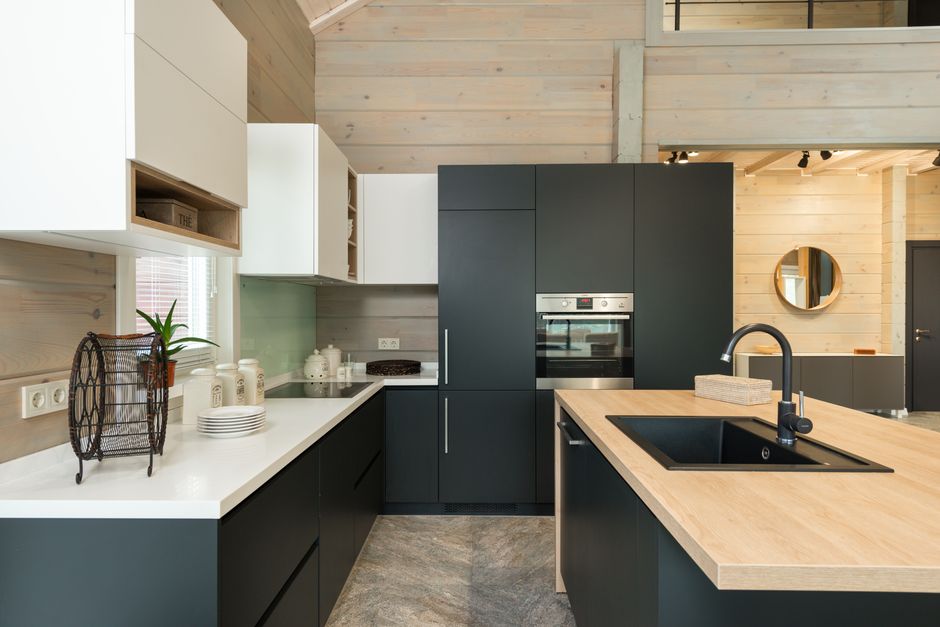
Notes from the shop on cabinet making in Austin, TX: joinery choices, wood movement through humid and dry seasons, finishing schedules and fitting cabinets into real rooms.
What We Cover
- From Drawings to Install: Cabinet Lead Times How a cabinet maker orders the weeks between final drawings and install day, and what slows a job down.
- Fitting Cabinets in Older Austin Bungalows Out-of-square walls, shifted floors and tight kitchens in Hyde Park and Travis Heights homes, and how a shop scribes cabinets to fit.
- What a Cabinet Finishing Schedule Looks Like Sanding, sealing, topcoats and cure time for kitchen cabinets, and how Austin heat and humidity change the schedule.
- Mortise and Tenon or Dado for a Cabinet Box A cabinet maker explains where mortise and tenon joints, dados and rabbets each belong in an Austin kitchen cabinet.
- Veneer Plywood or Solid Wood for Cabinet Boxes How veneer plywood and solid wood edge banding compare for cabinet boxes, doors and shelves in Austin homes.
- How Wood Movement Shows Up in Austin Cabinets Why cabinet doors and panels swell in a humid Austin spring and shrink in a dry summer, and how a shop builds for it.
Cabinet Maker in Austin, TX
A cabinet maker in Austin, TX works between two kinds of air. Spring brings damp weather off the Colorado River and Lady Bird Lake, and summer brings dry air from the air conditioner. Every board in a kitchen has to cope with both. The shop work starts long before the install, with rough lumber, a jointer, a planer and a table saw, and ends with a finished box that has to fit a real room.
Joinery by hand and by machine
Most cabinet joints are cut on a machine and checked by hand. A mortise and tenon holds the face frame, a dado carries the shelf and a rabbet seats the back panel. Each one is cut on the table saw or the router and fitted dry before glue touches it. A joint that closes without force is a joint that will stay closed through the seasons.
Wood, plywood and the weather
Solid wood edges look right and take a finish well, but they move across the grain through an Austin year. Veneer plywood stays flatter, so it carries the box, while solid stock goes into frames and floating panels. Houses in Hyde Park, Travis Heights, Clarksville and Tarrytown each carry their own damp or dry corners, and the shop plans for them.
Finish, lead time and the handoff
A finishing schedule is a run of sanding, sealer and topcoats with drying time between each, and Austin heat and humidity change how long that takes. After cure comes the handoff from shop to house, where cabinets are scribed to walls that rarely sit square, whether the kitchen is new in Mueller or old on a hillside below Mount Bonnell.
Guides
The pages here cover wood movement through the seasons, joint choices, finishing schedules, plywood against solid wood, the weeks between drawings and install day, and fitting cabinets into older bungalows around Austin, TX.
Latest Guides
Choosing a Hardwood for Cabinet Doors in Austin
Pick up two cabinet doors cut from different species and the difference shows before any finish goes on. One is dense and pale with a tight grain. The other has open pores and a loud figure. Both will hang on the same hinges, and both will move with the same Austin weather, but they will wear, stain and age in different ways. Choosing the species is the first real decision in a cabinet job, and it is made on the bench, not on a screen.
Why does the species matter in a house that swings from humid to dry?
Every hardwood takes up moisture from damp air and gives it back in dry air. A spring afternoon near Lady Bird Lake pushes a lot of moisture into a kitchen, and a summer of running air conditioning pulls it out again. Boards swell and shrink across their width in that cycle, and some species do it more than others. A species that moves a great deal needs narrower parts and more careful panel work. A steadier species is more forgiving of a wide door.
The species also decides how the door reads once it is finished. Grain pattern, pore size and natural colour all come through a stain or a clear coat, so a species chosen for how it takes a finish will look planned, while one chosen for the wrong reasons looks like a compromise.
What does maple do on a cabinet door?
Hard maple is close grained, pale and quiet. It has almost no visible pore, so a painted maple door shows a smooth surface with no texture telegraphing through the paint. That is why it is the usual choice for painted Shaker doors. Under a clear finish it shows a soft, even tone that ages toward cream over the years.
Maple has one known weakness. It takes stain unevenly, and dark stains on maple can turn blotchy because the density of the wood changes from one patch to the next. A maker who builds with maple for a dark finish uses a conditioner or a toned topcoat, and tests on an offcut from the same board before touching a door. Maple is also hard on cutters, so the table saw blade and the router bits are kept sharp, since a dull edge burns the wood and leaves a mark that no sanding quite removes.
Where does oak earn its place?
Oak is open grained, and the open grain is the point. Red oak shows a warm, slightly pink cast and a strong cathedral figure on flat sawn faces. White oak is greyer and tighter, and it holds up well in damp rooms because its pores are plugged. Quartersawn white oak shows a straight grain with flecks of ray figure, a look associated with early twentieth century furniture, and it is a good match for Craftsman style kitchens in Hyde Park and Clarksville bungalows.
The open pores take stain deeply, and a stained oak door looks consistent across a whole kitchen. If the door is to be painted, the pores need grain filler first or the texture shows through. Oak is also one of the better species for solid frames, since it is strong at a mortise and tenon joint and stays put when it is cut from straight stock.
How do walnut and cherry behave?
Walnut is dark chocolate brown with purple and grey streaks. It is stable once dry, cuts cleanly on the table saw and planes to a clean surface. Under a clear oil or a satin lacquer it needs no stain at all. It is a favourite for slab doors where the grain is the whole design.
Cherry starts pale pink and darkens to a deep reddish brown with exposure to light. A cabinet maker tells the client about the colour change in advance, since a new cherry kitchen is lighter than the same kitchen two summers later. A south facing window in a house near Zilker Park speeds the darkening. Cherry is also prone to burn marks from a dull blade, so the cut quality depends on tool setup.
Is pecan or alder worth considering in Central Texas?
Pecan grows across Texas and is the state tree, and the lumber is a close relative of hickory. It is heavy, hard and strongly figured, with colour ranging from pale sapwood to dark heartwood in the same board. That variation gives a rustic kitchen real character, but it also makes matching doors a slow job, and the wood is difficult to machine cleanly.
Alder is a softer wood with a fine, even grain and a warm tone. It takes stain well and is often chosen for knotty looks. It dents more easily than maple or oak, so a busy family kitchen may wear it faster, though some owners prefer the lived in look that develops.
How do the species compare at a glance?
Species Grain Takes stain Good for paint Notes Hard maple Tight, plain Unevenly, needs conditioner Yes Smooth, burns under a dull blade Red oak Open, bold Deeply and evenly Needs grain filler Strong joints, warm cast White oak Open, straighter Evenly Needs grain filler Handles damp rooms well Walnut Medium, flowing Rarely needed Seldom painted Cuts cleanly, dark tone Cherry Fine, even Evenly Seldom painted Darkens with light Pecan Open, wild Variable Rarely Heavy, hard to machine Alder Fine, soft Evenly Yes Dents more easily What does the grade of the board change?
Lumber is sold in grades, and the top grade has long clear boards with few knots and little colour difference. A lower grade has more sapwood, small knots and streaks. Neither is wrong. A clear finish on a modern kitchen asks for tight colour control, and the maker pulls boards from a stack and lays them out so neighbouring doors match. A rustic kitchen may use the lower grade on purpose, with knots left in as part of the look.
Grade also changes yield. A board with defects has to be cut around them, so a kitchen of the lower grade uses more lumber for the same number of doors. That is a shop planning matter, and it comes into the schedule when the stock is milled on the jointer and planer.
How does the finish change the choice?
A painted door hides the species, so the sensible approach is a stable, close grained wood that will not telegraph texture, which usually means maple. A stained door shows the grain, so the species and the stain have to be chosen together, with a sample made on the same wood. A clear finish shows everything, including colour variation between boards, and it asks for the best matching.
The finishing schedule also differs. Open grained species need filler or a heavier first coat if a glassy surface is wanted. Dense species need a thinner sealer coat so the topcoat can grip. A shop that finishes all of its own work learns these details species by species, and the schedule is written to match.
Which species suits which room?
A kitchen with a lot of cooking and steam leans toward white oak or maple under a durable finish. A study or a built in bookcase in Tarrytown or Travis Heights can carry walnut, which is not asked to resist grease. A bathroom vanity takes a stable species and a thorough seal on every face, because damp air gets in from both sides. A mudroom bench in a Mueller townhouse can be alder or oak, since it will be kicked, sat on and leaned against.
Sample boards settle most questions. A maker finishes a small offcut of each candidate species with the actual stain and topcoat, and the sample goes into the room where the cabinets will live, in the real light, before any lumber is ordered.
Species is a bench decision, and it works best when it is tested on a sample in the room. A door chosen that way will look right on day one and still look right after a few Austin summers.

Drawer Boxes, Slides and Hinges: Questions Before Install
Drawers and doors are the parts of a cabinet that get touched many times a day, and they are the parts that fail first when the hardware or the joinery was an afterthought. A cabinet maker checks them in a set order, bench first and house second. The questions below follow that order, and they come from the kinds of things Austin homeowners ask when the boxes arrive and the drawers are the next thing to be hung.
What is a drawer box actually made of?
A drawer box is a small open top box with four sides and a bottom. The front that shows on the kitchen is a separate piece, called the drawer front, which is screwed to the box from inside so its position can be adjusted. Most shop built boxes use solid hardwood sides, such as maple or oak, and a plywood bottom that slides into a groove cut along the inside of all four sides.
Boxes made from sheet material with a veneer or melamine face are common in frameless cabinets. They go together fast and stay flat. Solid sides take more time, but they hold a screw better and can be repaired by a person with a hand plane. Neither choice is wrong, and the decision is usually driven by the style of the kitchen and how hard the drawers will be worked.
Why do dovetails come up so often?
A dovetail is a joint with interlocking wedges, called tails and pins, cut so the two boards cannot be pulled apart in the direction a drawer front gets yanked. A drawer front takes a lot of pulling force over years, and a plain butt joint held with glue and a few nails relies on the glue alone. A dovetail has mechanical strength before any glue goes in.
They are cut with a router and a jig, on a dedicated dovetail machine, or by hand with a saw and a chisel. A router cut dovetail is consistent and strong. A hand cut version shows slight irregularities that some owners value. A rabbet joint with glue and screws is a fair middle option where speed matters more than the look.
How do drawer slides differ?
A drawer slide is a pair of rails, one fixed to the cabinet and one to the drawer, with ball bearings or rollers between them. Side mount slides sit in the gap between the box and the cabinet side, and they need a precise clearance on each side. Undermount slides sit below the box, hidden when the drawer is open, and they attach to the drawer bottom and the sides of the cabinet.
Full extension slides let the drawer come out until the whole box is clear, so the back of the drawer is reachable. Partial extension slides stop short, which leaves the back corner difficult to reach. Soft close is a damper built into the slide that catches the drawer in the last inch and lets it settle shut. The load rating of a slide matters for deep pot drawers and file drawers, and the maker picks the rating by the weight the drawer will carry, not the look of the hardware.
What is a euro hinge and why is it adjustable?
A euro hinge is the cup shaped hinge that hides inside the door. A round hole about the size of a coaster is drilled into the back of the door, the hinge cup drops into it, and the arm clips onto a mounting plate fixed to the cabinet side or the face frame. After installation the door can be moved in three directions with small screws: in and out, side to side and up and down.
That adjustment is what lets a maker line up a run of doors so all the gaps look the same width. It also lets the door be tuned later when the seasons move the wood. A door that sat flush in a dry January can rub in a humid May, and a quarter turn on a hinge screw fixes it. Soft close dampers are built into many of these hinges now, and they work the same way as the damper in a slide.
How much overlay should a door have?
Overlay describes how far the door lies over the cabinet opening. A full overlay door covers almost the whole face of the cabinet and leaves a narrow reveal between neighbours. A partial overlay door covers part of the face frame and leaves a visible band of frame. An inset door sits inside the frame opening, flush with the surface, and needs tight tolerances because there is nowhere to hide an uneven gap.
Inset doors look the cleanest and demand the most skill. The door has to be sized to the opening with a small, even gap, and it has to move with the season without binding, which is a real test in a climate where the air changes as much as it does around Austin. Full overlay is more forgiving. A maker will talk the owner through these trade offs with a sample door on the bench.
Where do the hinge and slide positions get decided?
They are set on the bench, in the shop, before any finish goes on. Hinge cups are bored on a drill press or with a jig, and the mounting plate holes are drilled in the carcass sides while the box is still flat on the saw table. Slide positions are marked from a fixed reference so every drawer in a run sits at the same height. Drilling after finishing risks chips and scratches on a finished surface, so the work is done early and the hardware is removed before finishing and replaced afterward.
What gets checked before the drawers go to the house?
A maker runs each drawer through a bench test. The box is slid in and out on its slides ten or twenty times to confirm it runs straight. The front is held up to the opening to check the gap. The bottom is checked for sag by loading the drawer with a typical weight. Each slide is checked for squareness, since a slide that is a hair out of parallel makes a drawer that wanders.
Drawer fronts are numbered on the back so they return to the same opening after finishing. Parts that are damaged or short are caught here, in the shop, where the fix is a few hours with a clamp, not a second trip to a house in Hyde Park or Travis Heights.
What happens at the install?
The boxes are set and levelled, fixed to the studs and to each other, and the hardware goes back on. Drawer fronts are adjusted until the gaps are even. Doors are hung and tuned on their hinges. A drawer that binds usually points to a cabinet that has been pulled out of square by a crooked wall, and the cure is a shim or a scribe, not a harder push on the slide.
A good install ends with every door and drawer opening and closing without a sound. A maker returns after the first season to retune the hinges, because wood that moved with the weather has changed the gaps slightly, and a few turns of a screw bring them back.
How should drawers be cared for?
Keep the slides clean and free of grit. Wipe spills off the inside of the box, since water standing on a plywood bottom lifts the grain. Avoid loading a drawer beyond what it was built for, and open it by its front rather than pulling on a hinge or a box side. Lubricate the slides only if the maker says to, because the wrong oil attracts dust.
Drawers and hinges are small parts with long working lives, and the choices behind them are made at the bench. A set built and checked in that order will still close quietly years later in an Austin kitchen.